
So, You Want to Publish a Book: A Comparative Guide to Indie and Traditional Publishing
When the path looks like a maze designed by a caffeinated squirrel

So, you want to publish a book? Now what? Where do you start? Which path is right for you? Is querying agents the only way, or the best way, to get there? What is the difference between traditional publishing and indie publishing? How long does it take to publish? How do genres affect wordcounts? For the love, will someone just explain the process?
Greetings, brave soul! Grab a coffee (or Sonic drink!), that snuggly blanket always slung across the furniture, and your favorite chair.
Let’s unravel.
Standing at the edge of a great book idea is exhilarating—right up until you realize the path to publishing looks less like a yellow brick road and more like a maze designed by a caffeinated squirrel. You’re likely staring at the horizon, wondering if you should spend the next three years courting literary agents like a Victorian suitor, or if you should go indie and take full control of the chaos yourself.
Between the “rules” of word counts—where your epic fantasy is apparently too long, and your novel is suspiciously short—and industry timelines that move at the speed of a tectonic plate, it’s enough to make you want to retire to a life of professional catherding.
Instead of finding inspiration, you’re just finding new ways to stare blankly at your screen while your tea goes cold.
In this deep dive, we’re clearing the fog and looking at the “pros” and “very loud cons” of both publishing avenues to help you figure out which one won’t make you regret your life choices.
As a sanity-saving bonus, I’m giving away a limited number of copies of my 60-page e-book, How to Survive an Indie Book Launch—Without Losing Your Mind. You’ll find my exact step-by-step process at the end of this article, specifically designed to help you launch your book without ending up in a fetal position under your desk.
What pray-tell is the difference between Traditional Publishing and Indie Publishing?
Whether you’re a wide-eyed publishing newbie or a grizzled veteran working on book number twenty, you’ve likely realized that the industry is basically a "Choose Your Own Adventure" novel where both endings require an alarming amount of caffeine.
Two very different publishing models coming right up.
Indie-Publishing is a form of self-publishing where you hire freelancers to do part of the work. When I tackled my three indie titles, I was the one cutting checks for cover designers, interior formatters, editors, and publicity tours. It’s all out-of-pocket, which feels a bit like gambling, but the payoff is glorious: you keep every penny of those royalties minus the actual cost of the paper.
You have total freedom to be as weird or as niche as you want. As long as you don’t mind being the whole trifecta: Agent, publisher, and marketer. The CEO, CFO (chief financial officer), and COO (chief operations officers).
Most call it Indie for independent publishing. You write. Hire a team. And have total creative freedom. While you are the artist, the reader is the one with the credit card.
If you want to actually sell books instead of gifting them to your very confused relatives, you eventually have to stop writing solely for your "inner child.” You’ll need to start writing what a reader actually wants to stay up until 2:00 AM reading.
Self-publishing, in my opinion, is more along the lines of writing the story and doing everything yourself. It’s the ultimate lone-wolf move. Not hiring out any of the work. These are the ones who write the story and then decide to do every other technical task themselves without hiring a single soul. It’s definitely possible to do it well, but it requires the skill set of a Renaissance master and the patience of a saint.
Traditional publishing includes an in-house team that does everything for you. No need to hire freelancers. Or figure out the market.
Traditional is like staying at a fancy all-inclusive resort where they do the cooking and cleaning, but you’re not allowed to leave the property or change the menu. They provide the team. They pay for the cover. They assign the editor.
The catch? You lose almost all control. They’ll likely pick a cover you didn't ask for, take the lion’s share of the royalties because they’re "taking the risk," and keep you tethered to a contract that directs what—and how—you write. A big machine with a lot of moving parts, yet one that has connections, too.
Of course, if you find the right agent and a publishing house that actually "gets" your vision, the whole ordeal can transform into a remarkably smooth professional partnership. When the stars align, and you have a powerhouse team in your corner, the traditional route makes all those query letters feel like a distant, slightly blurry memory.
We’re just getting warmed up, so don't wander off just yet. I’m about to break everything down into a "side-by-side" battle of the pros and cons to help you decide which path is worth the headache.
I personally prefer the freedom of Indie-publishing versus Traditional publishing. Indie-publishing lets me follow my creative muse down whatever alley or multi-genre rabbit hole it decides to explore that day. I’d much rather own the whole house and deal with the chores myself.
What about Genres?
Depending on the genre, each agent or traditional publishing house will require a minimum word count. You’re required to stick within the publishing house’s guidelines for your genre. And sticking within the typical tropes that readers expect. Essentially, every genre has a "Goldilocks zone". And the publishing house and its editor will have input on how you do that.
But for indie publishing, if you want to write a novella that’s as short as a grocery list or a sprawling epic that could double as a doorstop, nobody is going to stop you. There are no minimum requirements or “trope police” knocking on your door. But give the readers something they actually want to read, unless you enjoy shouting into a void. You have the total, terrifying freedom to release your work in whatever length or format feels right for your soul.
This freedom is an especially massive win for the poets among us. Trying to get a book of poetry traditionally published is roughly as easy as teaching a cat to perform synchronized swimming, but in the indie world, you can hit "publish" on your stanzas whenever you please.
Whether it’s a quick-hit novella or a collection of verses that would make a traditional house break out in hives, the indie path means you get to decide when the work is done, how long it stays, and exactly how many rules you’re willing to break.
Behind-the-Scenes of Traditional Publishing
Traditional Publishing involves a writer finding a literary agent, which starts with querying the agent. You may go through dozens or more agents, waiting to hear back. But if you get an agent who is interested in your book idea, depending on what genre you’re writing, more details or content of the book will be needed—see below.
If you’re writing a novel, you’d better have the entire thing finished, polished, and ready for its close-up. There are no "vibes" or "rough ideas" allowed here; they want the whole manuscript, from the opening hook to the final period. It’s a high-stakes audition where you’ve already done all the work before you even know if you have the job.
However, if you’re diving into nonfiction, the process is a different kind of beast. You don't need a finished book, but you need a few chapters written and a book outline. And you may need a book proposal—which is basically a 30-page business plan that proves why people would want your book. I’ve survived the ordeal of writing one myself, and let me tell you, it is an absolute doozy. It’s a grueling, soul-baring marathon that makes a marathon look like a casual stroll to the mailbox.
Why do you want an agent in Traditional publishing?
A good literary agent is essentially a high-end bodyguard for your intellectual property. They spend their days navigating the labyrinthine “legalese” of publishing contracts, ensuring that a stray clause doesn’t accidentally sign away your firstborn child or the movie rights to your life story.
Think of them as a professional negotiator who speaks fluent “Contract” so you don’t have to; they are the buffer between your sensitive artist soul and the cold, hard machinery of a corporate publishing house.
On the financial front, the relationship is beautifully—and sometimes terrifyingly—symbiotic. Your agent is the ultimate “no win, no fee” partner. They don’t see a single dime until they’ve successfully dragged a signed contract across the finish line. Because their paycheck is a direct percentage of yours, they have a very healthy, very good motivation to fight for that advance money.
It’s a comforting thought to have a professional pit bull in your corner, but remember: if you aren’t getting paid, they are probably living on ramen noodles.
They are deeply invested in your success, mostly because your success may be the one thing standing between them and a very empty bank account. When they go to bat for your book, they aren’t just fighting for your “art”—they’re fighting for their next mortgage payment.
What happens after you get an agent?
Once an agent finally says "yes," don't pop the champagne just yet—you’re about to enter the editorial equivalent of a Navy SEAL training camp. You may spend weeks "tightening" your manuscript until it’s leaner than a long distance runner.
Agents are basically high-level matchmakers who know exactly which publishers are hungry for your specific brand of weirdness and which ones have already hit their "supernatural thriller" quota for the year.
It’s a serious game of professional networking where your agent uses their hard-earned contacts to keep your book from falling into the dreaded slush pile, ensuring your masterpiece actually lands on the desk of someone who has the power to buy it.
Over Simplified Traditional Publishing Steps:
Write the book (fiction) or part of it (nonfiction)
Fiction: Write the FULL novel with the required word count for your genre
Nonfiction: you only need 3 or 4 written chapters, plus the full outline for the book
Research literary agents who are open for submission & who accept your genre (thriller, historical romance, sci-fi, western, speculative fiction, nonfiction, etc)
Query agent(s) with your book idea
Get accepted by an agent (can take months!)
Your agent pitches to a publishing house(s)
Book idea gets accepted by a publisher
Publisher assigns you an editor to work on the manuscript
Spend months editing
Book is launched 1-2 years after being with a publisher
Marketing—you will be expected to get the word out & market, market, market
Pros: you have a built-in team, your book may be in brick-and-mortar stores, reach an audience you may not reach with indie publishing, and they handle legal liabilities
Cons: “gatekeeping” who gets a book deal because of a limited number of available slots, you lose a lot of control, may not have any personal rights to your work for YEARS (or forever?), the publisher may modify content to fit current cultural models, hard to earn a profitable living (not impossible but rare), most profits (if any) go to the publisher, the whole process AFTER finishing a book, to publication, can take 1-3 years.
Behind-the-Scenes of Indie Publishing
Why I Indie Published?
I chose the indie path for all 3 of my books because I wanted the freedom to publish smaller, punchy nonfiction books. Which means, no corporate committee telling me my 30,000-word manuscript was “too awkward” of a word count.
I wrote without fear of being censored by a big publishing house or stripped of content because it didn’t meet a cultural trend. This does not always happen, but a traditional publisher is allergic to risk. So they can be more sensitive to themes or ideas.
I also have a strong visual sense for what makes a good cover. Of course, I’m biased.
But the thought of a publisher handing me a cover I hated made me hyperventilate. By hiring my own freelance designer, I got to be the creative director instead of a passive spectator.
I even went as far as hand-picking and purchasing commercial licenses for specific graphics for all three of my books. While you don’t have to buy your own graphics—most designers have their own stashes—I wanted what I wanted. I handed over my “vision board,” and my licensed images, and the designer worked their magic while I retained the power of the veto.
I made the final call on the design. Or in my co-written book, my coauthor and I made that call.
As an example, my Amazon books include the top row, with 3 books. I paid a cover designer for those. The bottom, I designed myself. They were FREE lead magnets for my website.
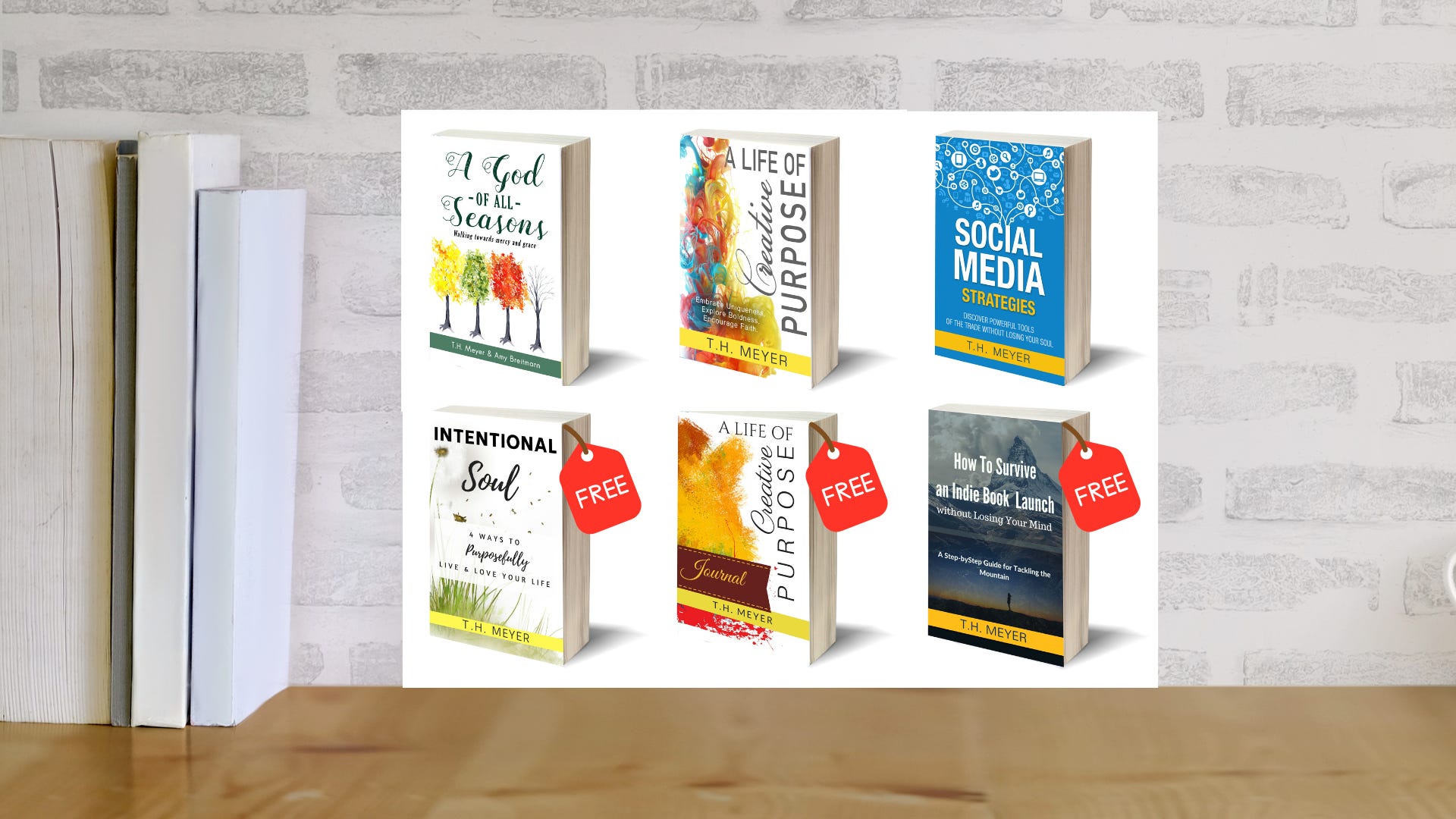
One of the biggest perks of going indie is the sheer speed of it.
In the traditional publishing world, even after you’ve secured an agent and a publisher, you might still be waiting a year or two before your book actually smells like fresh ink. It’s a process that moves with all the urgency of a glacier, and I had no desire to see my “timely” ideas become historical artifacts by the time they hit the shelves.
As an indie author, I can take a manuscript from a caffeinated brain-dump to a published book in about three to six months. I’ve heard legendary tales of “rapid-release” authors who can write and publish in a mere four to eight weeks, which is impressive, but honestly sounds like a one-way ticket to a nervous breakdown.
I have zero desire to move quite that fast—I’d like to actually enjoy my life and maybe see my family once in a while.
Being an indie author means having a front-row seat to the data, giving you full access to Amazon Ads and a direct line to your ROI. While the learning curve is admittedly steep enough to require a safety harness, you have the total freedom to explore, tweak, and optimize your strategy in real-time.
There is a serious professional satisfaction in watching your book climb the rankings and knowing that every bit of progress is a result of your own hands-on tinkering.
Indie Timelines
The takeaway is that you get to set the pace. You aren’t stuck in a corporate bottleneck waiting for a marketing team to decide which fiscal quarter fits you. Whether you want to take a measured six months or pull a literary sprint, the timeline belongs to you.
You’re the one holding the stopwatch, which means the only person you’re waiting on is the person in the mirror.
Being indie also allows you to update blurbs, which may be more effective than the old ones. In 2026, I did just that. I updated Amazon’s book blurb for my main book, A Life of Creative Purpose. And over the years, I’ve updated the book blurb on my co-written book, A God of All Seasons.
Over Simplified Indie Publishing Steps:
Write the book any genre, any way
(Optional but recommended) Research similar published books
Pick out a title (and subtitle for nonfiction)
Hire a book editor or use editing programs
Hire a cover designer (or make your own if you have an eye for graphics)
Hire an interior formatter for print and ebooks (both require different coding and setup). Or do it yourself if you have the knack for it.
(Optional but recommended) Send book to Beta readers (working/edit draft), or final ready-to-print manuscript to ARC readers (Advance Reader Copies)
Marketing—full visibility on your marketing, along with control to tweak Ads until they work for you
Submit to publicity platforms (more info in my ebook at the bottom of this article)
Pros: 100% own the rights to your work, minimal royalty fees taken out of your pay, full creative control over content and cover, build your own team, visibility on marketing return on investment (ROI), freedom to write across genres without needing permission, release books in your timing, freedom to write the story without being censored, redo covers and edit content after published.
Cons: building a team may be overwhelming—at first, you don’t have a big publishing house pushing your book into brick-and-mortar stores, uploading a book for optimal searches in Amazon’s KDP (self-publishing platform) requires a deeper understanding of keywords, categories, and titles.
Do you need an agent or publisher for Indie Publishing?
No. You do not need either of them. You write the book. Get it ready to publish.
Then you go straight to Amazon’s KDP program and upload it (once it’s correctly formatted, has a print cover, and an ebook cover).
Amazon is not just a retail store. They are publishers, too. They offer print-on-demand. Which means, you can get YOUR book shipped to your house. And you only paying the cost for printing (not the retail price!).
Plus, buyers can find you. As we know, Amazon is a mega store.
However, there are other printing platforms with retail stores. Amazon is not the only one. They’re just the biggest ones, where buyers can get dog food, underwear, anti-snoring devices, and your book.
If you just want to print your book, there are other options. No store. No active retail side where buyers can browse. These only print. Nobody sees it but you, the platform, and God.
Go with one or ALL of them. With indie publishing, it’s your choice.
Printing platforms WITH a store, available to Indie authors:
· Amazon KDP
· Barnes & Noble
· Kobo
· Apple Books
Print-only platforms, with NO STORE, available to Indie authors:
· Ingram Spark
· Draft2Digital
· Publish Drive
· Lulu
Where do you start? And what’s the first step?
For any route, write the book. That’s the basic step. But you know that already!
At the end of the day, regardless of which path you choose, writing the book is the hardest part of the job.
Once you move past the "sitting in your chair" phase, you have to get serious about your goals: are you looking for a hobby or a business?
If your dream is to be a full-time author with a genuine shot at a profitable income, the indie route offers the most leverage. But be warned, it usually takes authors more than one book to build something sustainable for the long haul.
Deciding which one works best for you.
Are you willing to learn what it takes to publish? Do you want a quicker turnaround for making your books available? Do you prefer fewer rules and less strict standards, such as wordcount minimums or cultural current events, impacting content? Do you want to write any genre without a publisher directing your genre lane? Is this book just for you? Do you want full rights and control over your work?
I’d suggest you Indie publish.
Does the thought of publishing by yourself (even after hiring freelancers), overwhelm you? Are you less concerned about full rights to your work? Would you rather have someone else upload your books and handle distribution? Are you comfortable with a publishing company directing your writing content? Are you willing to take longer to see your book in print? Does “self” publishing leave a bad taste in your mouth?
Then I’d suggest you go with traditional publishing.
Choosing your path is a bit like deciding whether to build your own house or move into a managed apartment complex. If you’re a control enthusiast who wants to decide the lot, pick the paint, own the house, and set the construction schedule, then Indie publishing is calling your name.
Just be prepared to occasionally hit your thumb with the hammer. If you value creative autonomy, speed to market, and the long-term retention of your rights, indie publishing offers the most direct route to building a self-sustained business.
However, if the thought of managing a construction crew makes you want to hide under the covers, and you’re perfectly happy letting a landlord pick the carpet, handle the plumbing, and possibly evict you at a moment’s notice, Traditional publishing is likely your best bet.
Essentially, if the logistical demands of production and distribution feel overwhelming, and you prefer the validation and infrastructure of an established house, traditional publishing may be a better fit.
Choosing the right publishing path requires an honest assessment of your professional goals and personal temperament.
Ultimately, the decision rests on whether you want to act as the primary architect of your career or partner with an industry team to manage the complexities for you.
If you missed the LIVE, watch it here (or again). Thanks to the folks who joined! Y’all rock. And also, what’s up with my hands?? LOL! ***Behind the Scenes:📚100+ Books, ✍️Hybrid Publishing, 🥳 Author/writer Sustainability, and shedding 75-pounds to be a healthier writer with @Tricia Goyer
Indie and Traditional authors, it’s time to talk about the reality of the modern publishing landscape. Tricia has published over 100 books and navigated the shift from Legacy Traditional deals to the freedom of Indie publishing. We talked about:
When she got started & her writing process for releasing 4-5 books a year
Why does she choose specific paths for specific projects
Agents, Publishing, & Writing conferences
Industry Evolution: What is actually working in 2026 versus 26 years ago
Writing in multiple genres & how she picks which one to write
The difference between Indie & Traditional Publishing and when do you need an agent
Why it’s recommended you get an agent if you go Traditional
What is a book proposal & who usually needs them
Publishing with a small press versus indie publishing
What is the first step for a new author wanting to publish
How she managed a 75lb health transformation while balancing a prolific career and family
A tool for your checking your metabolic health, in the comments 👇
Invitation—starting a group for writers to get healthy in community
If you want to write long-term, this is for you.
Here is your metabolic link to check your health, click here.

Why wait years for a traditional publisher to greenlight your vision when you can bring your book to life in months? In this updated 60-page essential guide, I break down my step-by-step indie publishing process from my first books. Learn what I did for creative sovereignty, custom cover design, tools for real-time marketing, and more.
See how you can write without the fear of being “trend-filtered” for indie publishing. This book offers a roadmap for the modern author. Learn how to:
Get started, step-by-step
Find tools with links to help the process
Market your book with resources & marketing platforms
Stop waiting for permission. Start your indie journey today.
FOR A LIMITED NUMBER OF FREE COPIES, GO HERE OR CLICK THE PICTURE.
More Articles you might want to check out:
· The Pros and Cons of Getting a Literary Agent
· Articles on Genre wordcounts for Traditional Publishers: Manuscript Academy and one at MetaStellar
· Article for more in-depth info on Publishing companies at Selfpublishing.com
congratulationspls have you ever do any visual marketing video to promote your book before?
I never knew the difference between indie and self-published writer. I am an indie writer, happily outsourcing the technical bits! Thanks for giving me the right words.